
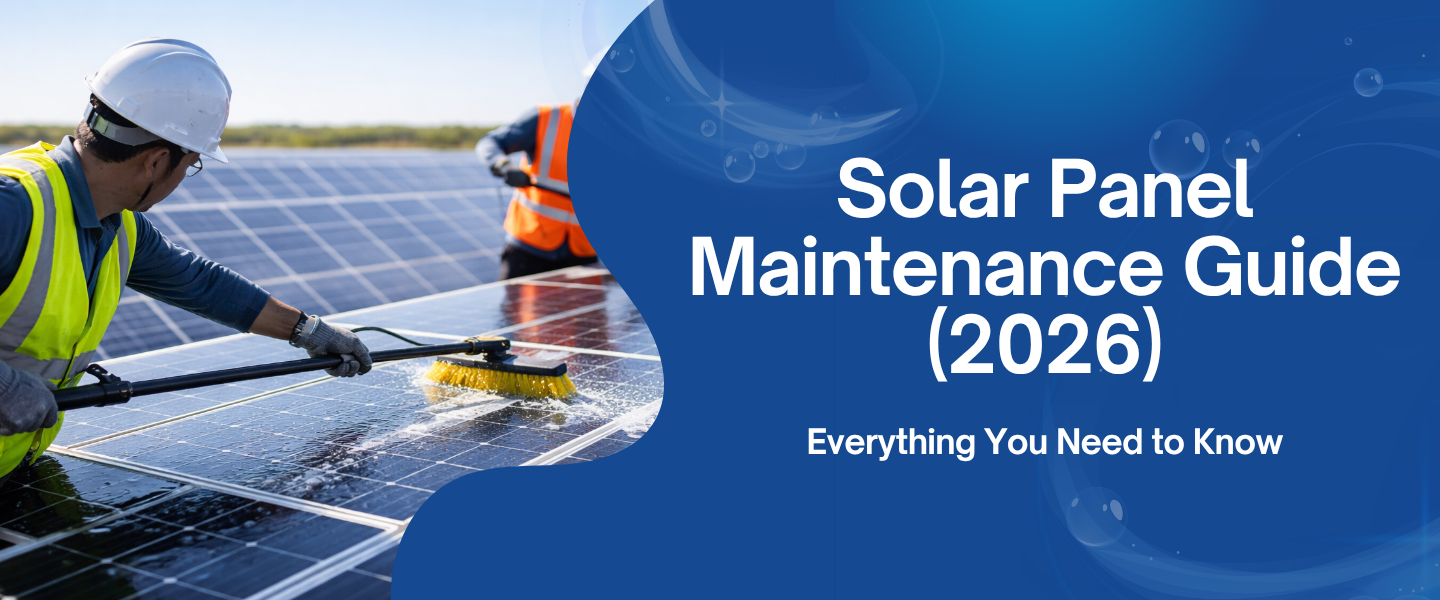
Guide for Maintaining Solar Panels: The Ultimate Guide
Choosing to use solar power may be the best decision you ever made in terms of saving money and helping the environment. However, since solar panels operate as top-quality technology, they need to have some care taken to keep them operating optimally. Dirt, bird feces, and even pollen can create a "shading effect" that greatly reduces energy production.
Here’s how you can keep your solar panels running efficiently until their full lifespan of up to 25 to 30 years.
1. Why Is It Important To Clean Solar Panels?
Homeowners often ask, “Doesn't the rain do the job of cleaning?” While it is true that intense rains might clear off loose debris, gentle rain combined with dirt will lead to the formation of "mud film," which would decrease the energy production. Below are reasons why it is important to clean your panels regularly.
1. Improving the Energy Yield Efficiency
Dust, pollen grains, and other industrial particulate matter act as a shield between the rays of the sun and photovoltaic cells. Studies reveal that the phenomenon known as "soiling" may decrease the efficiency by 5% to 15%, with the number surpassing 25% in regions such as Indore and Jaipur.
2. Avoiding “Hot Spots” and Other Damages
Apart from being aesthetically unpleasing, bird excrements and stubborn stains are detrimental to the safety of the solar system since they cover individual cells that start overheating because of the inability of heat dissipation.
3. Preserving the Warranty
Tier-1 brands like Luminous and Kirloskar mention in their instruction manuals that the solar panel must be cleaned to perform at its best efficiency level. There may be situations where your warranty would be affected if the solar panel stops working because of neglect or "etching," especially if it occurs due to acidic bird droppings.
4. Acids Eroding the Panel (Bird Dropping)
The bird's droppings are highly acidic, which will erode the anti-reflective layer of the glass when exposed to sunlight. The etching cannot be cleaned by any professional method once it has occurred.
5. Fast Payback Period
Solar is an investment in terms of finances. With less energy generated from the system, your savings will take longer to accumulate because the system generates fewer kilowatt hours than expected.
2. What is the Best Time to Clean Solar Panels?
There is always an ideal time for everything including cleaning solar panels. You can not decide randomly that you will use the hose for cleaning.
-Morning or Evening Time: These are the perfect options. The solar panels absorb plenty of sunlight during the daytime which heats the surface up. The contact of cold water with such a surface will result in thermal shocks and cracks.
-Cloudy Weather: In case there are clouds in the sky, the surface of the solar panels will be cooler, which means that water will not dry immediately leaving mineral spots.
-Seasons: Generally, a two-time per year cleaning is enough. But if your region is dusty and close to construction sites, then you need to do it more often, i.e., Quarterly (every 3 months)
3. Should the Solar Panels Be Turned Off When Performing Routine Maintenance?
Yes, the solar panels should be turned off for routine maintenance.
Electrical Shock: Although the solar panels are waterproof, you still need to take care when handling high-voltage electrical parts to avoid electric shock.
Protection of the System: Turning off the system through the AC/DC disconnect switch ensures that the system will not supply any power while you are performing maintenance on the solar panel array.
4. How to Maintain Solar Panels Without a Professional Cleaning Crew?
Sometimes, you don’t have to rely on professional cleaning crews to clean your solar panels. In case your rooftop is easy to reach and safe, then here’s what you need to do:
Required Tools:
A soft-bristled brush mounted on a long stick.
A gardening hose (don’t use a high-pressure washer).
A bucket filled with normal temperature water and dish soap.
A squeegee to avoid water marks.
System Shutdown (Safety Comes First) Ensure that the system is powered off before beginning the cleaning. The process involves switching off the system via the AC and DC disconnect switches. The purpose is to avoid high voltage when working around water and electricity.
Timing and Temperature Clean the panels either in the morning or evening when they are cool. Avoid spraying water on hot solar panels because they are susceptible to cracking (thermal shock).
Inspection Check the panels for any cracks and loose wiring first. In case you detect any issues, pause immediately and call a professional. Also, avoid cleaning the panels if there is any damage to the solar panels.
First Wash Rinse the panels using a garden hose. Note: Ensure that the water pressure is low, or you can harm the waterproof seals.
Cleaning Rinse the soft-bristle brush in water mixed with dish soap. Gently scrub the panels focusing on areas with bird droppings or difficult spots.
Second Wash It is now time to thoroughly rinse away any remaining soap on the solar panels using the garden hose.
Squeegee Dry It is important to squeegee the panels dry if you are living in an area where the water is hard since mineral deposits may form on the glass surface.
Guidelines for Cleaning Solar Panels
Here are important dos and don'ts for cleaning solar panels to make sure they function at optimal levels throughout their lifespan:
Don'ts (Avoid Doing These)
Don't Use Steel Wool and Wire Brushes: Do not use any abrasive material to clean solar panels since the scratches caused will reduce their efficiency by removing the anti-reflective coating.
Don't Use Bleach and Ammonia: Strong chemicals like bleach and ammonia may affect the sealants of the frame and thus should be avoided when cleaning solar panels.
Don't Use Pressure Washers: Never use high-pressure washers on solar panels since they can penetrate the seals of the panels, corroding them from inside, or even cracking silicon cells.
Don't Walk on Them: Avoid standing on the solar panels or leaning against them since it creates micro-cracks which then result in hotspots, killing the performance of solar panels.
Don't Clean During the Day: Never spray water on solar panels during the heat of the day as thermal shock caused by the sudden temperature change may break tempered glass.
The Do’s (Always Do These)
Clean Early or Late: Clean your panels only before 8:00 AM or after sunset because the glass should be cool.
Safety First: When working at a roof level, wear a safety harness. If the roof is steep or wet, don’t climb. Stay on the ground and clean using a telescopic pole with a soft brush.
Check First: Before wetting the panel, always check to see whether there are any loose wires or cracks in the glass. If there are any problems, call an expert.
De-ionized or Soft Water: If you live in an area where water is considered hard water, you should squeegee right away to avoid lime-scale stains which would block sunlight.
Don’t Wear Metals: Don’t have any metallic rings and watches while cleaning because they can easily damage the glass panel accidentally.
6. Water Conservation During Panel Cleaning
Since you utilize renewable energy, conservation must be a key focus in your activities. Here are some water-saving measures when cleaning your panels:
1. Dry Brushing
Before wetting the panels, brush the surface with a soft-bristle solar brush to dislodge the loose dust particles. If you live in a dusty place such as Indore, dry cleaning can remove up to 80 percent of the build-up, thus cutting down the need for water.
2. Use DI Water or Softened Water
Deionized water is more effective since it contains no minerals. It absorbs dirt quickly and dries without leaving scaling or white marks. With no traces left behind, you will not require the second rinse stage, which saves liters of water.
3. Automated and Water-Free Cleaners
For industrial and commercial facilities requiring high kW energy output, Waterless Robotic Cleaners can be considered. They rely on unique microfiber brushes and air-flow technology to ensure panel cleanliness without the use of any water, making them the epitome of eco-friendliness.
4. Protect Your Building's Rainwater Harvesting (RWH) System
If your building features an RWH system, divert the drainage pipe from your storage tank whenever you're cleaning your solar panels. Even "Green" or biodegradable soap must never get into your storage tank containing clean water.
5. Choose "Solar-Specific" Biodegradable Cleaners
If the use of soap becomes inevitable due to bird droppings, opt for cleaners that are certified biodegradable and neutral in terms of their pH level. This way, they will naturally decompose after leaving your roof surface.
5.Conclusion
Cleaning your solar panels is a very easy job and gives you several advantages in the long run. Just by dedicating a couple of hours each year to maintenance, you make sure that the energy powering your house or workplace is as efficient as possible.